
The Influence of Climate Change on Financial Risk Management in Canada’s Agricultural Sector
Historical Context of Canadian Agriculture
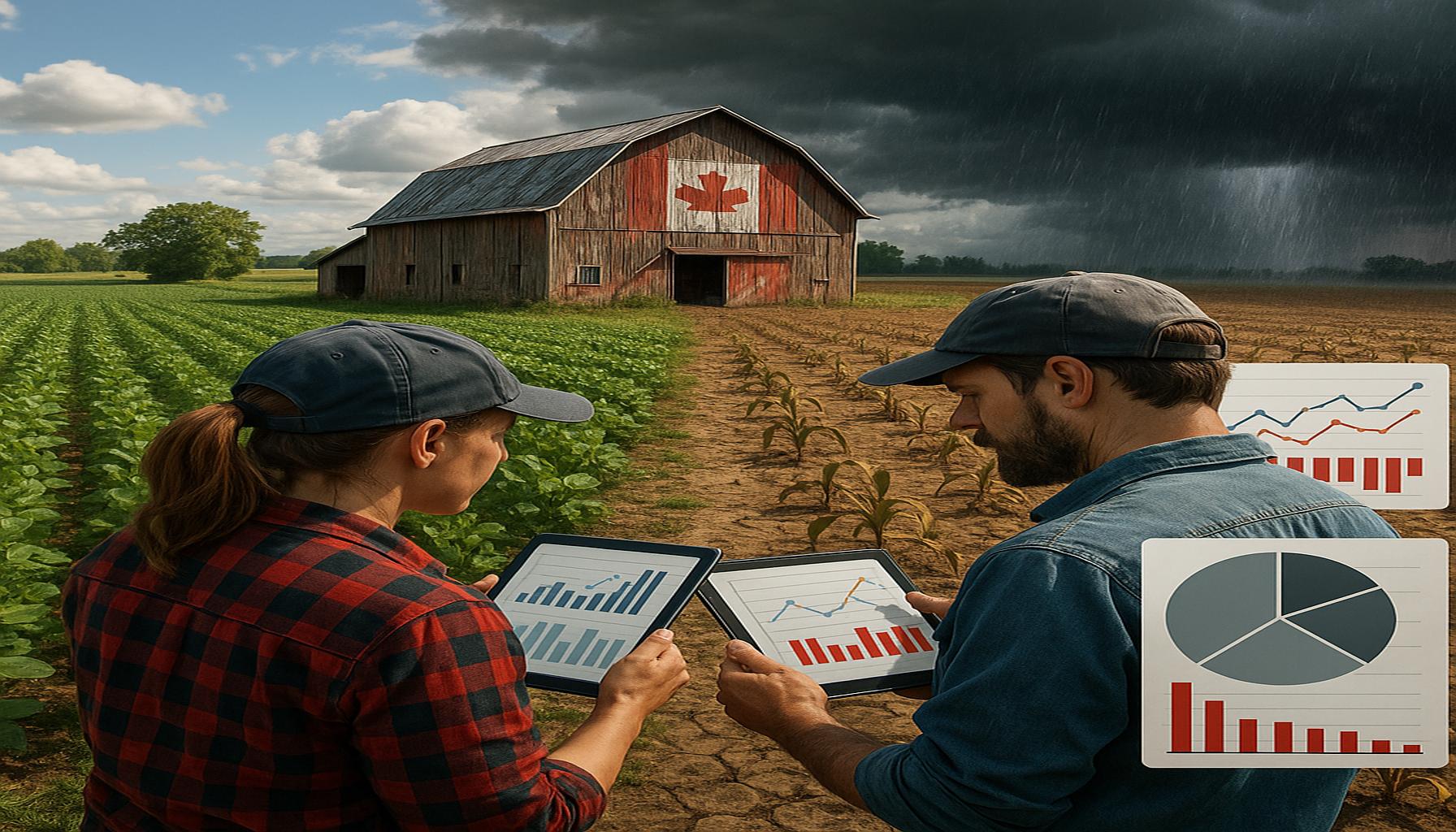
The agricultural sector in Canada has long been a backbone of the nation’s economy, intertwined with the fabric of rural life. Over the decades, this sector has experienced financial fluctuations shaped by a multitude of factors, including market demand and weather patterns. Each economic decision made in the past provides valuable lessons, especially as we confront the emerging threat of climate change.
Challenges Faced by Canadian Farmers
Historically, Canadian farmers have navigated numerous challenges that have tested their resilience and adaptability:
- Crop failures due to devastating winters or droughts. For instance, the 1988 drought in the Prairie provinces caused significant harvest losses, leading to a drop in grain exports and financial instability for many farmers.
- Market volatility resulting from global economic shifts. The 2008 financial crisis showcased how interconnected global markets can influence grain prices, impacting everything from planting decisions to financial planning for farmers.
- Policy changes that impact subsidies and support programs. The Federal government’s introduction of the Growing Forward initiative aimed to modernize and support agricultural practices, showing the importance of responsive policies in stabilizing the sector during uncertain times.
The Emergence of Climate Change as a Key Factor
Today, climate change introduces new layers of complexity to these established risks. Increasingly unpredictable weather can disrupt production cycles, complicating financial risk management strategies. This unpredictability has already been evident in the shift of growing seasons and crop viability in various regions. The anticipated increase in extreme weather events, such as floods and heat waves, makes historical data less reliable as a predictor for future yields.
Furthermore, the lessons learned from past events must reshape how farmers and financiers assess potential risks. They must now incorporate factors such as:
- Soil health and agricultural sustainability. As we recognize the benefits of regenerative practices, investing in soil health enhances resilience against climatic shocks and improves long-term productivity.
- Resource availability, including water and arable land. Areas like Southern Ontario are already facing water scarcity, threatening crop yields and necessitating conservation measures that have not traditionally been a priority.
- Market adaptability to climatic variations. Farmers are now being encouraged to diversify cropping systems to mitigate risks associated with fluctuating climate patterns, allowing them to remain viable despite adverse conditions.
Conclusion
The implications of climate change are profound, necessitating a reevaluation of traditional economic practices. Historical lessons regarding adaptability and resilience have never been more relevant. As we reflect on the past, it is crucial to adapt our approaches in finance and agriculture to prepare for a resilient agricultural future amidst environmental uncertainties. By learning from the challenges faced throughout history, Canadian farmers and decision-makers can foster stronger, more sustainable agricultural practices for generations to come.
DISCOVER MORE: Click here for the full guide
The Evolution of Financial Strategies in Response to Environmental Shifts
As the reality of climate change becomes increasingly tangible, a historical lens reveals the evolution of financial strategies within Canada’s agricultural sector. Financial risk management, broadly defined as the identification, assessment, and prioritization of risks followed by coordinated resources to minimize, control, and monitor the impact of such risks, has been shaped not only by economic pressures but also by a consistent environmental narrative. The recurring challenges posed by weather—be it drought, flooding, or unseasonal frosts—have necessitated a proactive approach to risk management that many farmers now recognize is imperative in the face of climate change.
Reflecting on the past, one can draw parallels between historical agricultural crises and the emerging risks presented by climate change. For example, the 1988 drought left a lasting impact on the Prairie provinces, prompting the need for enhanced risk assessment frameworks. This experience serves as a case study; farmers who previously relied on traditional methods of crop rotation and simple yield predictions were forced to adopt more sophisticated risk mitigation strategies. These adaptations included:
- Utilization of technology for precision agriculture and better forecasting. Farmers began investing in satellite imagery and data analytics to make informed decisions based on projected weather patterns, vastly improving their ability to anticipate and respond to climatic challenges.
- Diversification of crops as a buffer against market fluctuations and adverse climate conditions. The shift towards growing a broader range of crops has permitted farmers to spread risk and stabilize incomes, providing a critical financial cushion during unpredictable seasons.
- Engagement with agricultural insurance programs that address climate-induced impacts, illustrating how farmers have sought to safeguard their livelihoods against the financial repercussions of crop failure.
However, these strategies alone are insufficient in the face of the intensifying climate crisis. The increasing frequency and severity of extreme weather events challenge the foundation of long-standing risk management practices. Historical measures, built on past climate norms, may no longer yield reliable forecasts as the agricultural landscape transforms. Consequently, Canadian farmers must now explore innovative financial instruments that explicitly accommodate climate risk, such as weather derivatives or customized insurance policies tied directly to climatic outcomes.
Moreover, the concept of resilience has taken center stage. The ability to not only withstand but adapt to changing conditions is vital. A historically rooted understanding of resilience encourages current agricultural financial strategies to embrace sustainable practices—those that not only protect profits but also enhance soil quality and promote biodiversity. As farmers look ahead, the lessons learned from previous environmental crises serve as a crucial guide in navigating the complex interactions between finance, agriculture, and climate change. By harnessing these insights, stakeholders can ensure that the focus remains on long-term sustainability and profitability amid ongoing climate uncertainties.
LEARN MORE: Click here for details on how to apply
The Role of Policy and Government Support in Shaping Financial Resilience
As the agricultural sector grapples with the implications of climate change, the role of policy and government intervention becomes increasingly prominent in shaping financial risk management strategies. Historical policies have laid the groundwork for today’s response mechanisms, showcasing how government actions can significantly sway the resilience of farmers against climate-related financial risks. For instance, Canada’s Federal Agri-Invest Program, established in 2003, allows producers to set aside funds to help manage income declines due to unforeseen circumstances, a practice that has gained redefined importance in the context of climate variability.
Lessons from previous agricultural crises reinforce the need for adaptive policy frameworks. In the wake of the catastrophic 1980s farm crisis, which saw many farmers facing crippling debt due to fluctuating commodity prices and adverse weather conditions, governments recognized the necessity of comprehensive support systems. This realization birthed several safety net programs aimed at safeguarding agricultural income and stabilizing market conditions, including the Business Risk Management (BRM) suite of programs. These initiatives not only supply immediate relief but also encourage longer-term financial planning, allowing farmers to prepare for climate uncertainties.
Moreover, as climate change accelerates, policies must evolve to incorporate sustainability and climate preparedness as core tenets. Historical evidence suggests that carbon pricing mechanisms, introduced with the aim of reducing greenhouse gas emissions, can also have beneficial financial implications for the agricultural sector. Farmers increasingly find that investments in renewable energy or eco-friendly practices can lead to both lower emissions and enhanced profitability. For example, those who adopt agroforestry practices may qualify for carbon credits, providing an additional revenue stream while simultaneously contributing to climate mitigation efforts.
The integration of technology into policy frameworks has also taken shape through initiatives focusing on knowledge transfer and capacity building. The creation of platforms that encourage information sharing among farmers about best practices in climate resilience is paramount. Historical data indicates that regions that effectively share information about soil health, crop resilience, and weather patterns tend to outperform those with fragmented knowledge bases. The success of such initiatives can often be traced back to programs developed in response to past economic downturns, positioning these learning networks as critical in the present climate challenge.
Furthermore, the significance of community and cooperative models cannot be overlooked. Looking back at initiatives such as the cooperative movement that flourished in the 20th century, marked by collective buying power and shared resources, similar strategies are being revived today to address the rising financial risks stemming from climate change. By pooling resources to invest in technologies that facilitate better risk forecasts or engage in joint purchasing of insurance, farmers can reduce individual risk burdens while enhancing overall sector resilience.
As Canada continues to contend with the challenges posed by a changing climate, the lessons learned from historical experiences underscore the necessity for a robust, adaptable, and inclusive policy framework that fosters not just immediate survival, but long-term sustainability in agriculture. Ultimately, the interplay of historical insights, governmental support, and evolving financial strategies is forming a new narrative, one that aims to secure the future of Canadian agriculture amidst the complexities of climate change.
DISCOVER MORE: Click here for details on applying
Conclusion: Learning from the Past to Secure the Future
In reflection, the historical context of Canada’s agricultural sector illustrates a profound relationship between climate change and financial risk management strategies. The agricultural landscape has weathered numerous challenges, from economic downturns in the 1980s to contemporary climate crises. These past experiences have underscored the necessity of establishing comprehensive, adaptive policies that can effectively shield farmers from the unpredictability of environmental factors.
The evolution of programs such as the Business Risk Management (BRM) suite and the Federal Agri-Invest Program highlights the government’s role in fortifying the financial resilience of farmers. By learning from prior crises, policymakers can implement frameworks that not only provide immediate relief but also foster long-term planning and sustainability. As the agricultural community increasingly embraces technologies and cooperative models for resource sharing, we see a potential for improved risk mitigation strategies, enhancing both fiscal health and ecological stewardship.
Moreover, the incorporation of sustainability principles, such as carbon pricing mechanisms and investment in renewable energy, serves as a testament to the potential for innovative approaches to blend profitability with environmental responsibility. The lessons from the past reveal a path forward, one that necessitates collaboration among stakeholders and a shared commitment to building adaptive infrastructure capable of withstanding climatic uncertainties.
Ultimately, the future of Canada’s agricultural sector hinges on integrating historical lessons with contemporary innovation in financial risk management. By fostering resilience through well-crafted policies and robust community initiatives, we can ensure that the agricultural landscape thrives despite the looming challenges posed by climate change.