
Technical Analysis vs. Fundamental Analysis: Which Approach is Better for Beginner Investors?
Investment Strategies: A Historical Perspective
The evolution of investment strategies over the decades reflects the turbulent tides of economic events that have shaped the markets we know today. From the Great Depression of the 1930s to the 2008 financial crisis, each significant occurrence has imparted lessons on what works—and what does not—in investing. As the Canadian investment landscape shifts with new technologies and market dynamics, a well-rounded understanding of two primary analytical approaches—technical analysis and fundamental analysis—becomes indispensable for both novice and seasoned investors.
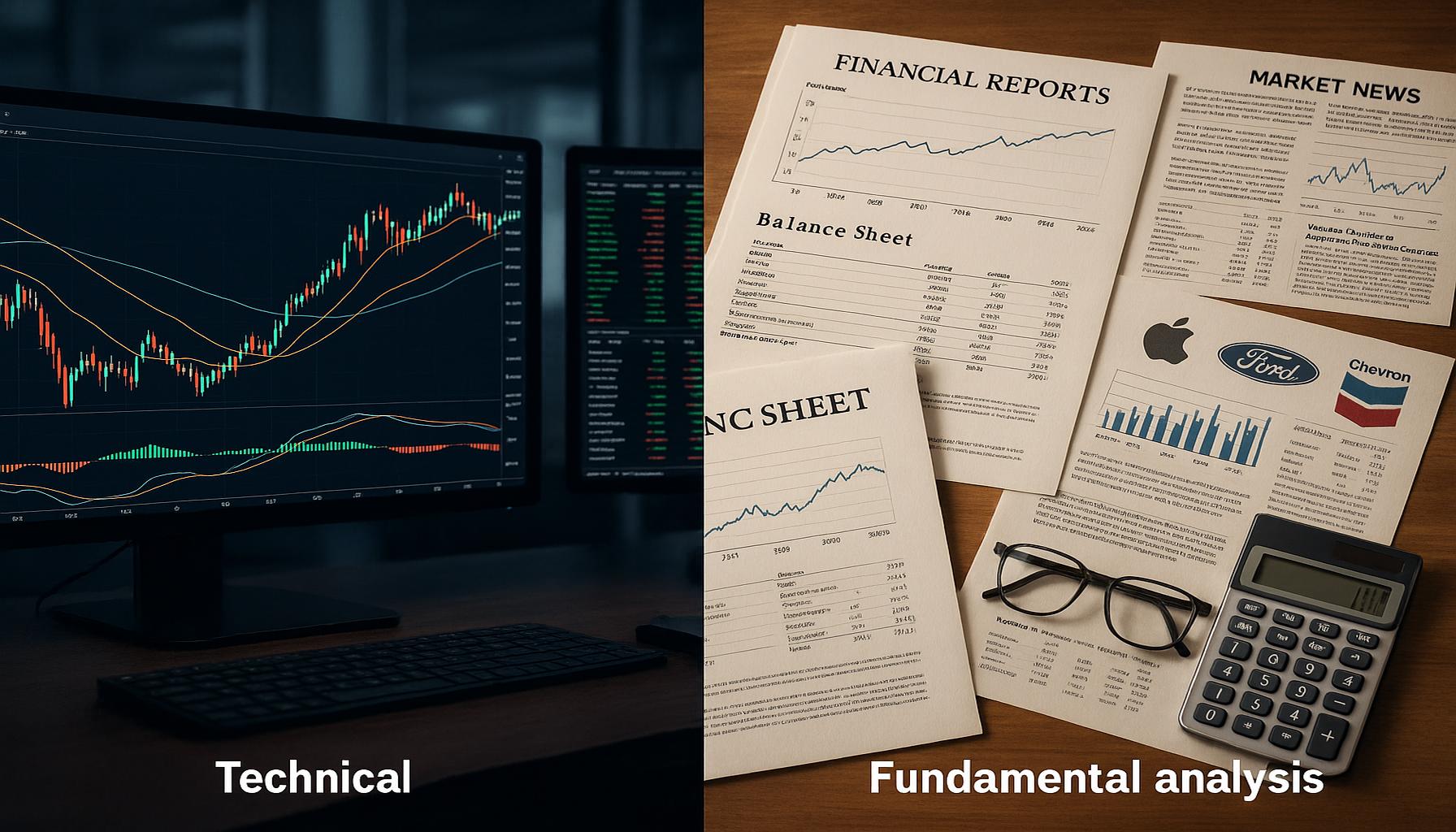
Technical analysis, grounded in the study of price patterns and trading volumes, utilizes charts to forecast future market movements. This approach interprets historical price action as a predictor of future performance. For example, many traders observed patterns, such as head and shoulders or double bottoms, to make decisions based on market sentiment rather than the intrinsic value of the assets. Notably, during periods of high volatility, technical analysis can become a valuable tool, helping investors react quickly to dynamic market conditions. Investor behaviors, which are often influenced by psychological factors, can cause market movements that technical indicators aim to capture.
Conversely, fundamental analysis focuses on the financial health and market potential of a company. This approach entails examining financial statements, earnings reports, and broader economic trends to evaluate a stock’s intrinsic value. During the 2008 financial crisis, many investors who relied solely on technical analysis experienced significant losses, as sudden market shifts outpaced patterns. However, those who understood fundamental indicators, such as a company’s balance sheet or economic indicators, were better positioned to navigate the downturn. For instance, Canadian investors who analyzed energy sector dynamics during this period were able to make more informed decisions, as they understood the reliance on oil prices and diversified their investments accordingly.
As we move forward in today’s more complex investment climate, an integrative approach that combines both technical and fundamental analysis may yield the best outcomes. Those who can harness insights from historical context not only align their strategies with their financial goals but also become more resilient to market fluctuations. The lessons learned from past economic crises serve as a foundation for current investment methodologies and continue to guide investors towards more informed decision-making in an evolving marketplace.
DISCOVER MORE: Click here to find out how to apply
Understanding Technical Analysis: Historical Context and Practical Insights
To fully grasp the merits of technical analysis, it is essential to delve into its historical significance and practical applications. This analytical approach began gaining traction in the early 20th century, notably through the work of Charles Dow, one of the founders of the Wall Street Journal. Dow formulated the first stock market averages, laying the groundwork for traders to observe price trends and gauge market momentum. As a result, his theories spurred the development of various charting techniques that allow investors to visualize market movements.
With the advent of computer technology in the late 20th century, technical analysis transformed dramatically. The introduction of advanced charting software enabled investors to analyze real-time data seamlessly, emphasizing the role of price patterns and market psychology. In the contemporary era, many Canadian investors employ technical analysis not only to identify entry and exit points but also to manage risk effectively. For instance, an investor may utilize tools like moving averages, relative strength index (RSI), and candlestick patterns to make swift trading decisions during periods of market volatility.
However, despite its advantages, technical analysis does have notable limitations. Since it relies heavily on historical price movements, it does not account for fundamental factors that may significantly influence stock prices. For example, a sudden policy shift in the Canadian government affecting the natural resources sector could destabilize the market, leading to price movements that technical indicators may fail to predict. Therefore, an investor solely dependent on technical analysis might be caught off guard and face considerable losses.
Fundamental Analysis: Lessons from Economic Crises
On the contrary, fundamental analysis provides a more holistic view of investment opportunities by examining the intrinsic values of a stock. The methodology of evaluating a company’s financial health through earnings reports, balance sheets, and industry dynamics allows investors to make sound, long-term decisions. For instance, during the Dot-com bubble in the early 2000s, many investors in Canada who focused on fundamental aspects such as revenue, profitability, and growth potential were able to identify overvalued tech companies and avoid the subsequent crash.
Furthermore, the lessons from the 2008 financial crisis underscore the importance of a solid grasp of fundamental indicators. Many of those who overlooked critical fundamental analysis suffered debilitating losses as they were unprepared for the drastic market downturn. In Canada, investors who paid attention to the implications of global economic pressures on the mortgage market fared better, as they smartly reallocated funds or pursued safer investments in more stable sectors. The convergence of these fundamentals helped investors maintain an informed perspective during the market’s turmoil.
- Technical analysis emphasizes price movements and market psychology.
- Fundamental analysis focuses on a company’s financial health and market potential.
- Both approaches have distinct advantages and limitations, influencing decision-making in varying market conditions.
As the conflict between these two analytical schools of thought continues, recognizing their respective strengths and weaknesses is vital for beginner investors. The dynamic Canadian market landscape requires a nuanced understanding that leverages insights from both technical and fundamental analysis to navigate shifting economic tides effectively.
DISCOVER MORE: Click here to learn about the pros and cons of ETF investments
The Synergy of Technical and Fundamental Analysis in Modern Investing
While both technical analysis and fundamental analysis have distinct approaches to evaluating market opportunities, history has shown that their combination can yield a more comprehensive investment strategy. Drawing from notable market events, such as the 2008 financial crisis and the pandemic-induced recession of 2020, investors in Canada are increasingly recognizing the importance of a dual approach. These periods served as critical reminders that neither analysis stands alone in forecasting potential pitfalls or uncovering underappreciated stocks.
During the 2008 financial crisis, for example, many investors who relied solely on technical indicators were caught unaware by the underlying economic turmoil. Companies, particularly in the financial sector, that appeared strong based on technical charts exhibited devastating plunges as fundamentals unraveled. Consider the case of major Canadian banks; while technical analysis may have suggested a bullish trend based on price action, fundamental indicators such as mortgage default rates and lending practices highlighted destabilizing risks. Hence, those who adopted a hybrid approach by integrating both analyses generally repositioned their portfolios early, decreasing potential losses.
Furthermore, the COVID-19 pandemic pushed the global economy into uncharted territory, illuminating the necessity for agile investment strategies. Investors who proactively analyzed fundamental data like earnings forecasts and sector resilience benefited significantly. For instance, those who recognized the value in technology stocks—businesses that thrived during lockdowns—positioned themselves favorably for financial gains. Technical indicators provided entry points, but it was the fundamental understanding of market conditions that ultimately guided wise investments.
- Market Volatility: The unpredictable nature of markets, such as during economic downturns, demonstrates how a mixed-method approach can provide an edge.
- Stock Valuation: Understanding a company’s earnings, dividends, and overall market potential through fundamental analysis complements technical signals, enabling investors to identify undervalued stocks.
- Risk Management: By employing both strategies, investors can better anticipate potential downturns and make informed decisions to mitigate risk.
Today’s sophisticated trading platforms allow novice investors access to both analytical methodologies, making it increasingly viable to merge insights from technical and fundamental perspectives. To illustrate, a beginner investor in Canada could utilize fundamental analysis to assess the financial integrity of a renewable energy company while employing technical indicators to refine the timing of their buy and sell orders. This multifaceted strategy is not only prudent but essential in the complex landscape of modern investing.
Ultimately, the historical lessons learned from past market events provide crucial guidance for present-day investors. Combining technical and fundamental analysis can equip beginners with the tools necessary to navigate the complexities of the stock market effectively. As they draw parallels between historical economic decisions and current methodologies, these investors will likely enhance their decision-making capabilities—potentially leading to more fruitful investment outcomes.
LEARN MORE: Click here to discover how to apply for the Amex Green Card
Reflecting on the Best Path for Beginner Investors
In the ever-evolving landscape of investment, the distinction between technical analysis and fundamental analysis is often a topic of contemplation for beginner investors. Throughout history, financial turmoil has unveiled the limitations inherent in relying exclusively on either approach. Significant events, such as the 2008 financial crisis, highlighted the risks of neglecting fundamental factors, while the COVID-19 pandemic underscored the importance of adapting strategies based on changing market conditions.
As investors today strive to strike a balance, the lessons gleaned from these historical episodes advocate for a combined methodology. Employing both technical and fundamental analysis can empower beginners to make more informed decisions. This synthesis not only enhances the understanding of market sentiment but also allows investors to gauge the intrinsic value of assets more accurately. For example, an investor assessing a Canadian tech firm might utilize fundamental analysis to evaluate revenue potential while leveraging technical analysis for optimal entry points as market trends unfold.
Ultimately, there is no universal answer to which analysis is superior; rather, the most effective approach is one that intertwines the insights of both methodologies. By embracing this dual perspective, novice investors can navigate the complexities of the stock market with greater confidence. As they learn from historical patterns and apply these insights, they are better positioned to not only protect their investments but also harness opportunities that may arise in the dynamic financial climate.

Linda Carter
Linda Carter is a writer and financial expert specializing in personal finance and financial planning. With extensive experience helping individuals achieve financial stability and make informed decisions, Linda shares her knowledge on our platform. Her goal is to empower readers with practical advice and strategies for financial success.